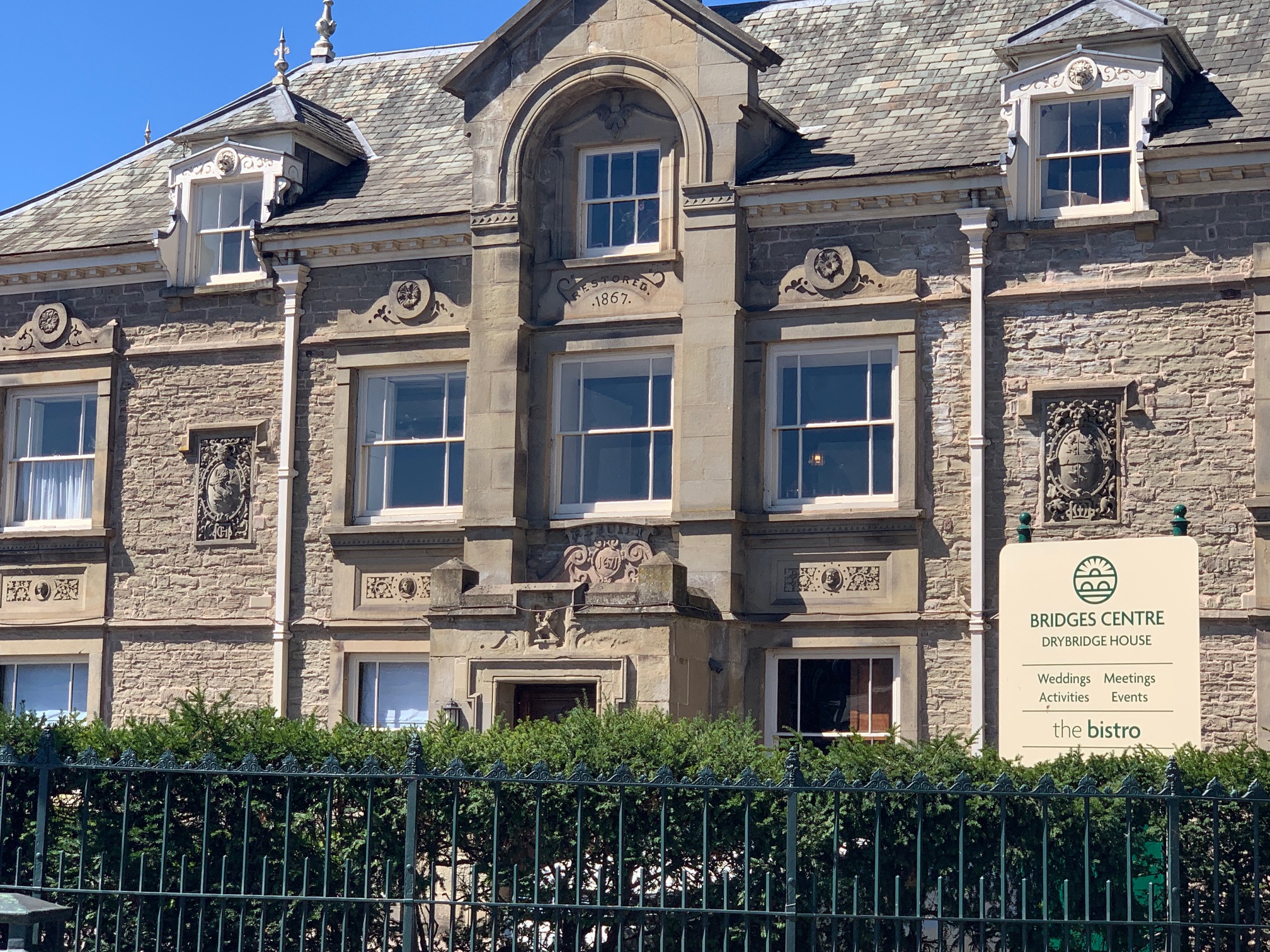
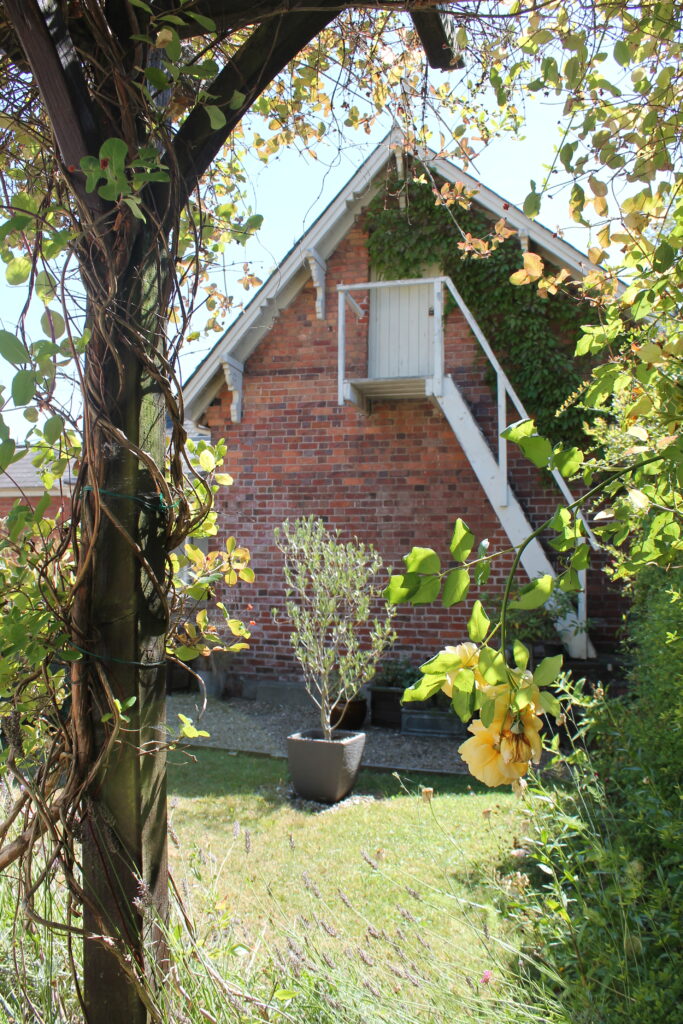
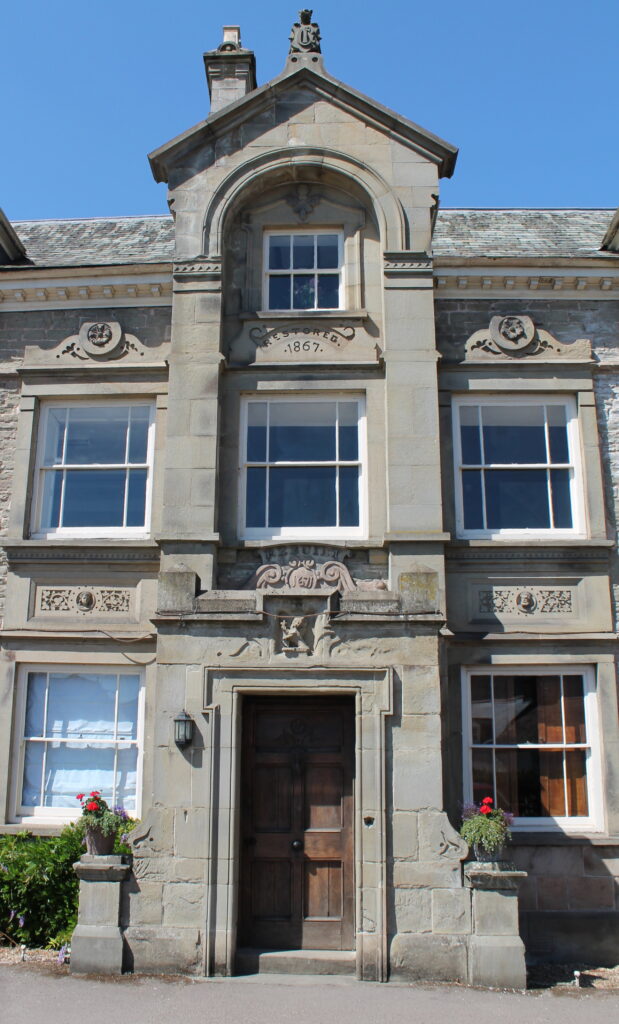
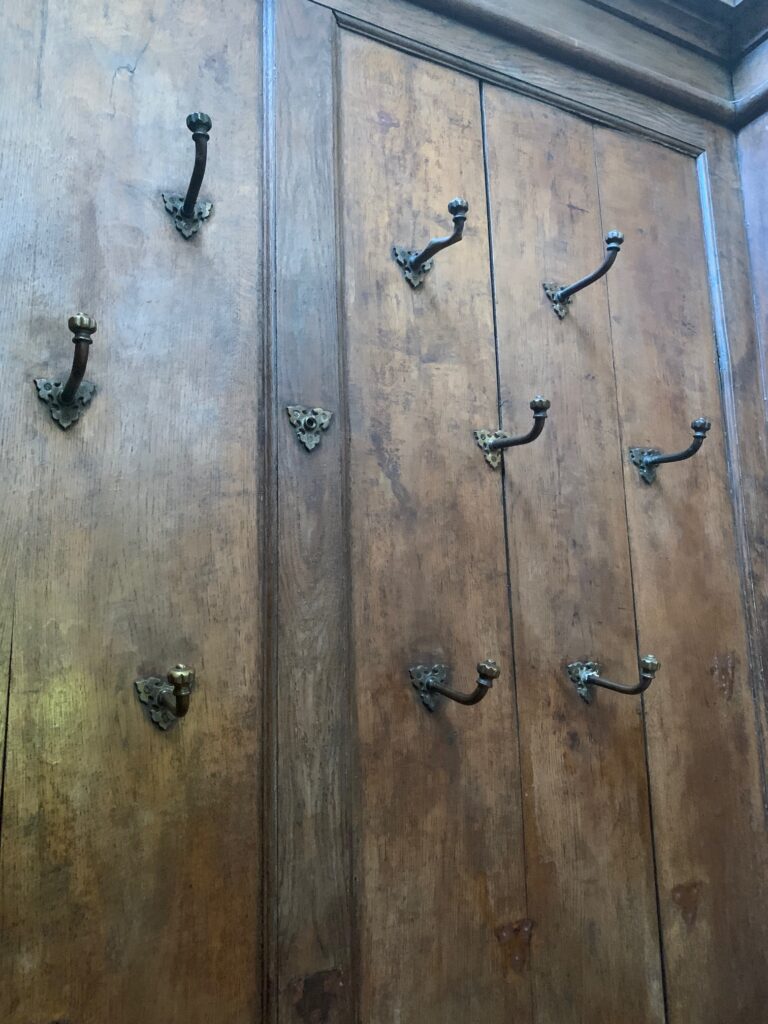
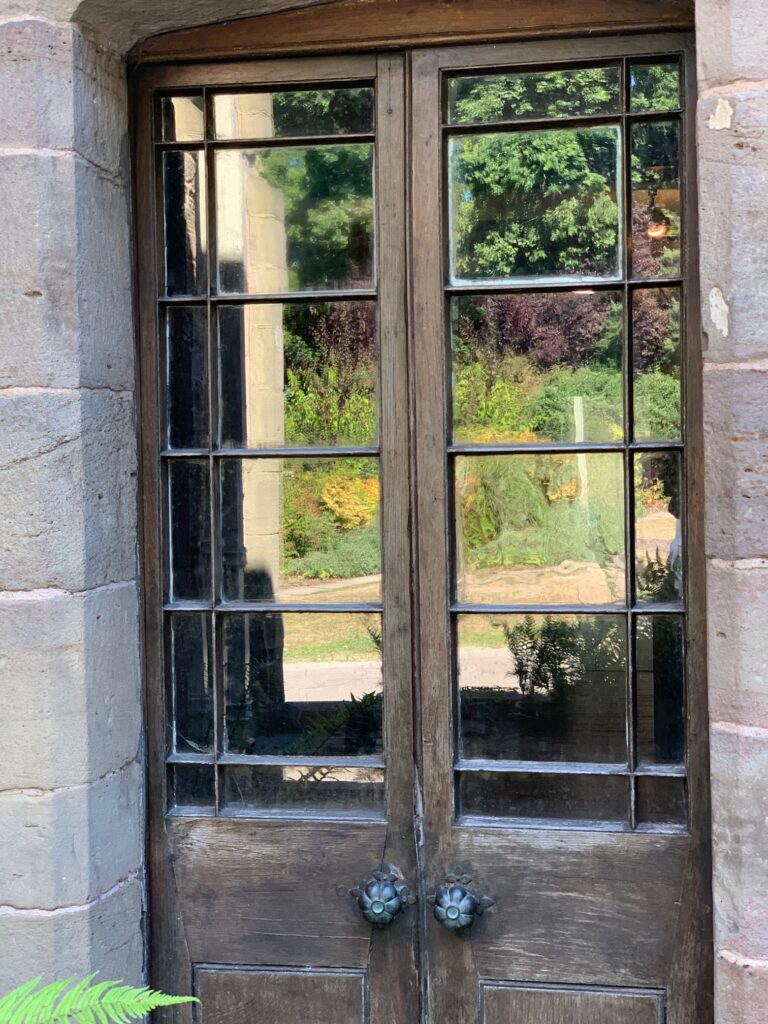
Drybridge House is a Grade II* listed building with a remarkable past — and today it is the home of Bridges Centre.
For more than four centuries, this site has played a role in the life of Monmouth. The Crompton-Roberts family, who owned the estate for 400 years, were known for their civic involvement and support of local causes. That tradition of community commitment is one we are proud to continue.
The Drybridge complex includes the historic house, a modern annexe and a former stable block now converted into business units. The restoration of the site began in 2001 and was made possible through support from the Heritage Lottery Fund, the Arts Lottery Fund, Cadw, charitable trusts, Monmouthshire County Council and generous local fundraising.
A House Through Time
Early Origins
Drybridge House is the third building to stand on this site.
The first house, built before 1558, was likely a large black-and-white gabled farmhouse.
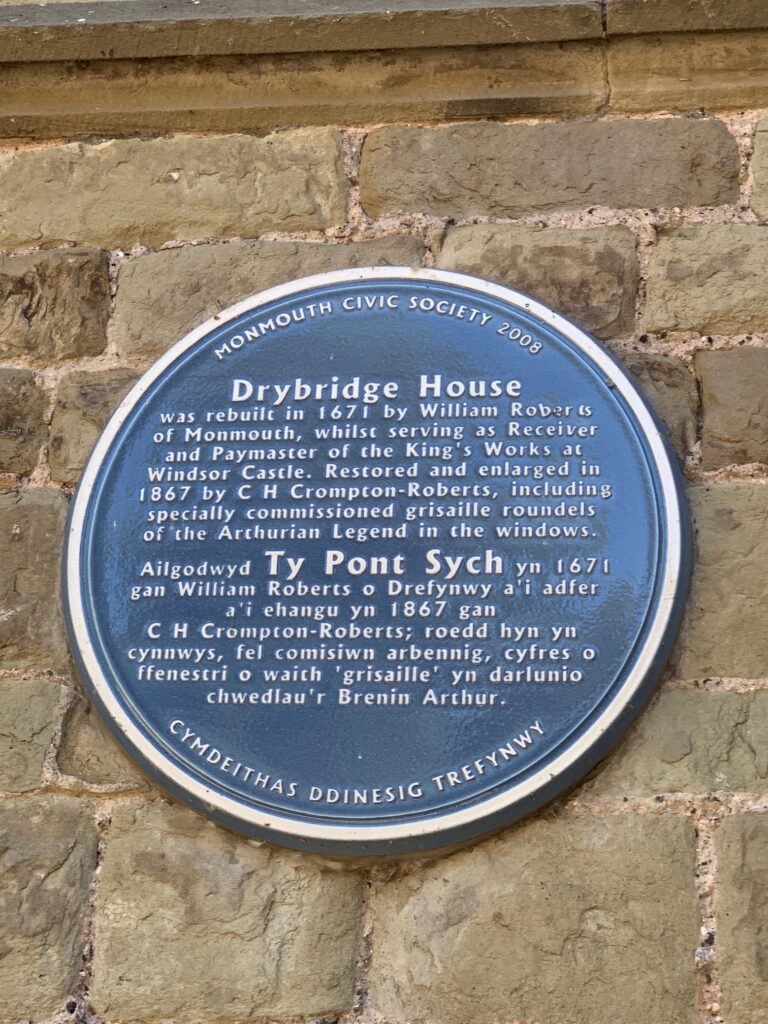
The second, built in 1671, was commissioned by William Roberts, Receiver and Paymaster of the King’s Works at Windsor Castle.
Elements of that 17th-century craftsmanship remain today. Visitors can still see:
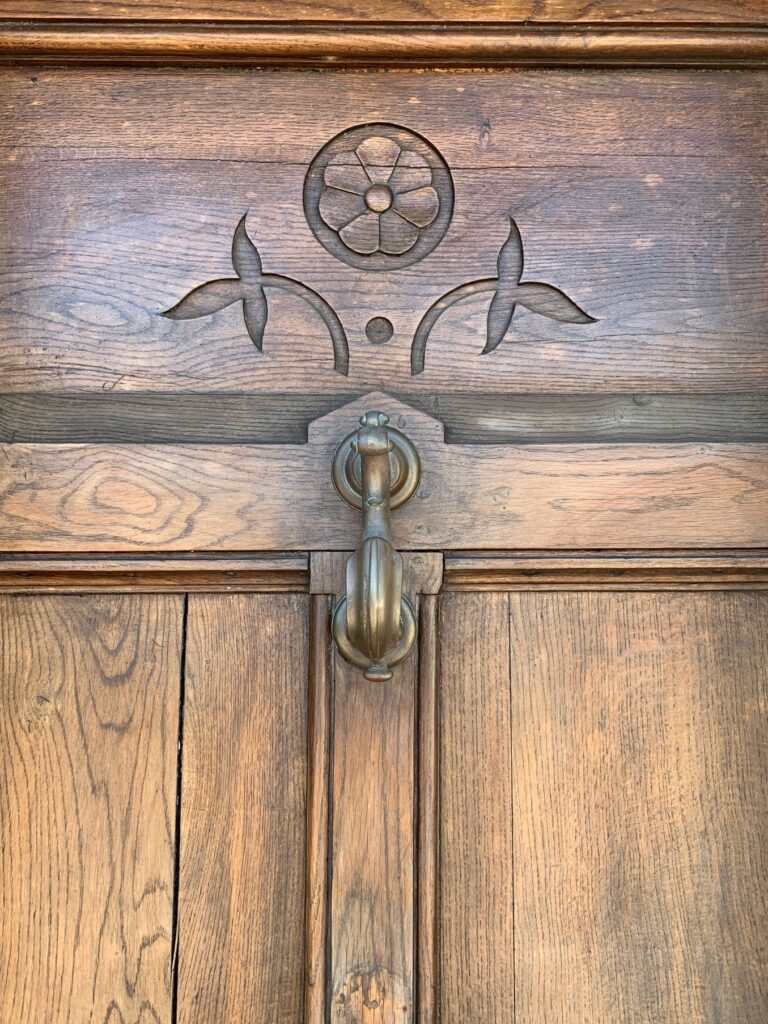
The studded oak door now used as the café entrance
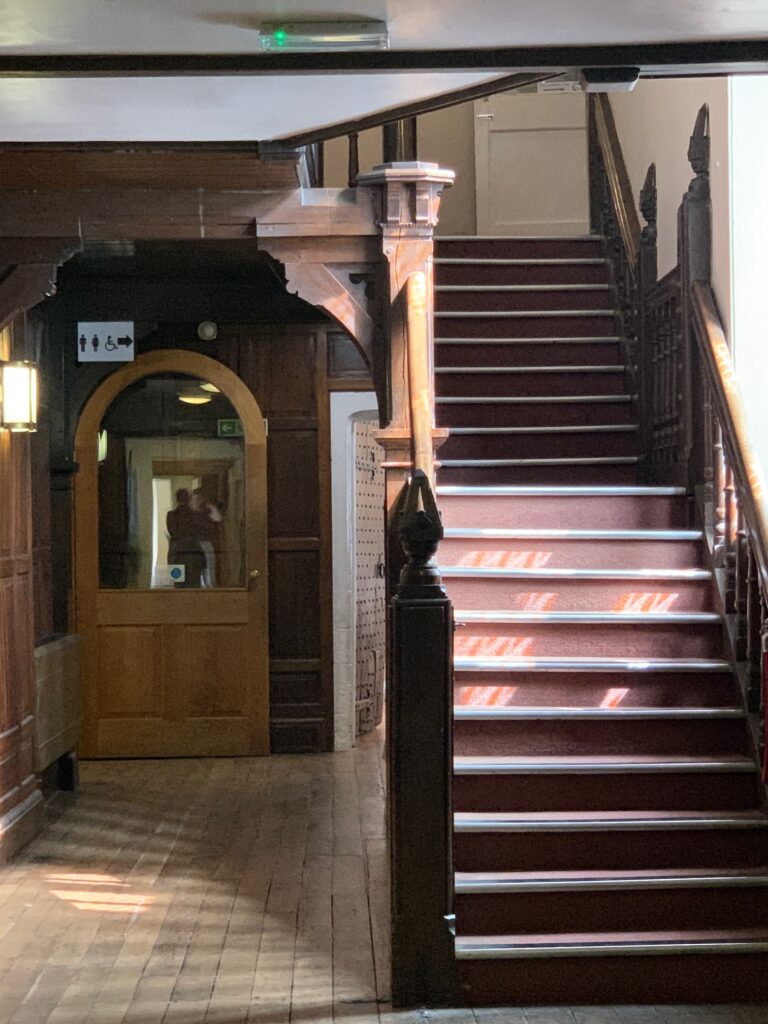
Original oak panelling and staircase features
Carved fireplaces and Delft-tiled surrounds
These surviving details connect the present building to its earliest architectural heritage.
Victorian Transformation
In 1867, the estate passed to Charles Henry Crompton-Roberts, who undertook a major restoration and enlargement of the house.
A passionate horticulturalist and sportsman, Charles designed landscaped gardens with an exceptional collection of trees and laid out a cricket pitch. W.G. Grace and his brother famously played here against the Monmouthshire side. While the pitch has not survived, many of the trees remain.
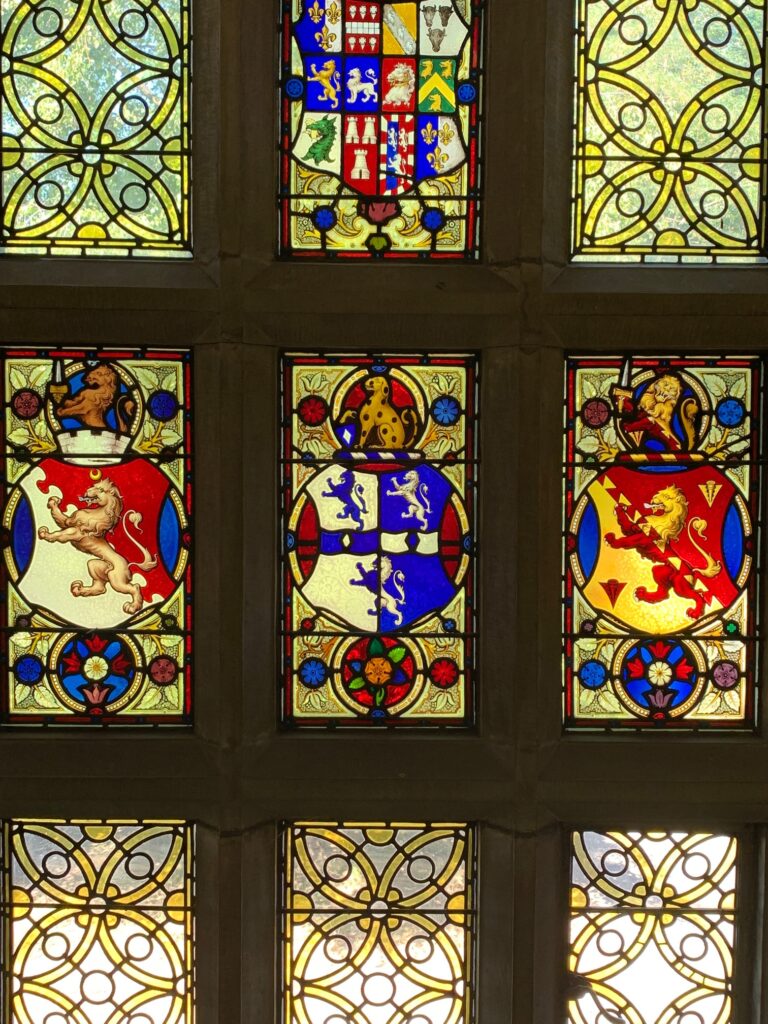
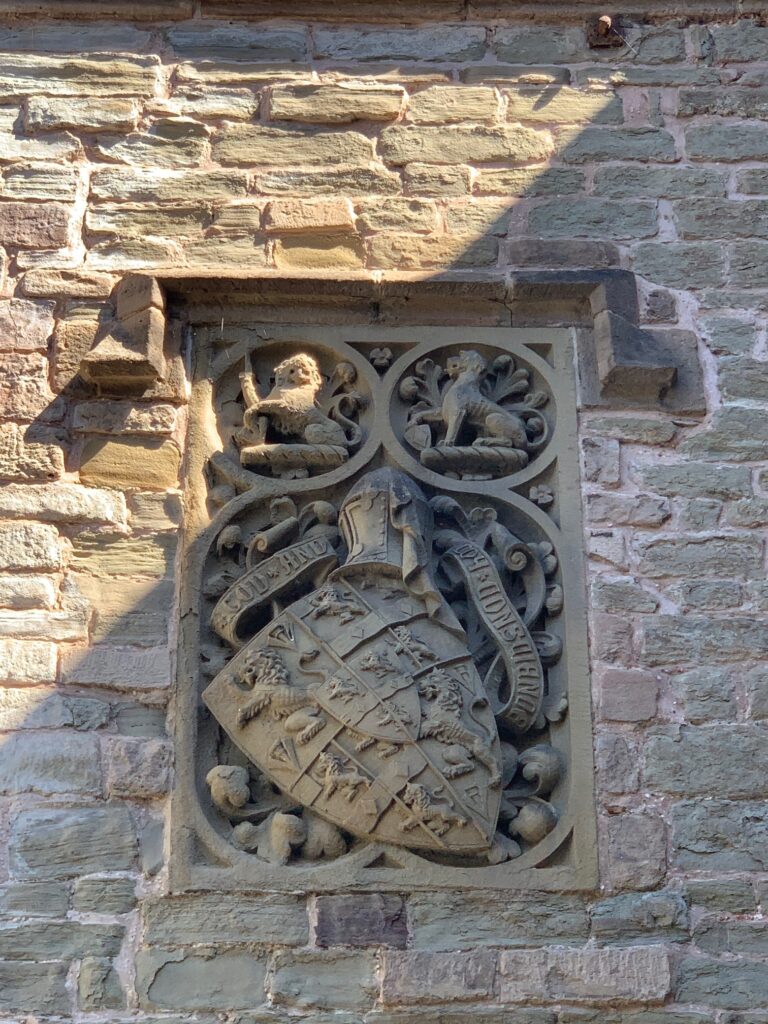
The family also commissioned notable artistic additions, including:
Stained glass grisaille roundels depicting the legend of King Arthur
Exterior stone carvings, including portraits of their children — Henry Roger, Violet Mary and Charles Montagu — still visible from the car park
These elements remain among the house’s most distinctive features.
From Private Home to Public Good
In 1947, the Crompton-Roberts family sold the house to the local authority for the benefit of the people of Monmouth, ending 400 years of continuous family ownership.
Over the following decades the building served as:
An old people’s home (with the modern annexe added in the 1950s)
A temporary police station
After a period of decline, the future of the complex changed dramatically.
In Autumn 2001, Bridges — then based on the Hancock Road industrial estate — secured a long lease from Monmouthshire County Council at a peppercorn rent, in return for restoring the site.
The modern annexe was redesigned first, creating:
A function room with stage
A kitchen and lounge
Upstairs meeting rooms
Bridges moved into its new home before restoration of the historic house and stables was completed in summer 2003. The full project cost £1.6 million and transformed Drybridge into a vibrant community hub once again.
The History of Bridges Centre
Bridges began in 1984, when a small group of volunteers in Monmouth formed a support group for local people facing financial hardship and isolation. At the time, a local factory closure had left many families struggling, and older residents were experiencing increasing isolation.
From a church hall, to a disused factory canteen, the project steadily grew. Bridges became a registered charity, staff were appointed, and services expanded. Over time, its impact deepened and widened.
The move to Drybridge House in 2003 marked a new chapter — providing a permanent home for a charity that had already become embedded in local life.
Today, Bridges Centre supports learning, care and wellbeing, community arts, social connection and a wide range of local services. While rooted in Monmouth, our reach now extends across Monmouthshire through community projects and a community shop.
We remain an independent charity, powered by volunteers, supported by funders, and driven by a commitment to strengthening community life.
Four hundred years of local legacy. More than forty years of community action. Still building bridges.
Further Reading
Available from reception:
From Featherbeds to Bridges – A published history of the Crompton-Roberts family and Drybridge House
The Trees and Gardens of Drybridge House – A guide to the estate’s landscape and tree collection
Cookie Policy
We use cookies on our website to give you the most relevant experience by remembering your preferences and repeat visits. By clicking “Accept All”, you consent to the use of ALL the cookies. However, you may visit "Cookie Settings" to provide a controlled consent.
This website uses cookies to improve your experience while you navigate through the website. Out of these, the cookies that are categorized as necessary are stored on your browser as they are essential for the working of basic functionalities of the website. We also use third-party cookies that help us analyze and understand how you use this website. These cookies will be stored in your browser only with your consent. You also have the option to opt-out of these cookies. But opting out of some of these cookies may affect your browsing experience.
Necessary cookies are absolutely essential for the website to function properly. These cookies ensure basic functionalities and security features of the website, anonymously.
Cookie
Duration
Description
cookielawinfo-checkbox-analytics
11 months
This cookie is set by GDPR Cookie Consent plugin. The cookie is used to store the user consent for the cookies in the category "Analytics".
cookielawinfo-checkbox-functional
11 months
The cookie is set by GDPR cookie consent to record the user consent for the cookies in the category "Functional".
cookielawinfo-checkbox-necessary
11 months
This cookie is set by GDPR Cookie Consent plugin. The cookies is used to store the user consent for the cookies in the category "Necessary".
cookielawinfo-checkbox-others
11 months
This cookie is set by GDPR Cookie Consent plugin. The cookie is used to store the user consent for the cookies in the category "Other.
cookielawinfo-checkbox-performance
11 months
This cookie is set by GDPR Cookie Consent plugin. The cookie is used to store the user consent for the cookies in the category "Performance".
viewed_cookie_policy
11 months
The cookie is set by the GDPR Cookie Consent plugin and is used to store whether or not user has consented to the use of cookies. It does not store any personal data.
Functional cookies help to perform certain functionalities like sharing the content of the website on social media platforms, collect feedbacks, and other third-party features.
Performance cookies are used to understand and analyze the key performance indexes of the website which helps in delivering a better user experience for the visitors.
Analytical cookies are used to understand how visitors interact with the website. These cookies help provide information on metrics the number of visitors, bounce rate, traffic source, etc.
Advertisement cookies are used to provide visitors with relevant ads and marketing campaigns. These cookies track visitors across websites and collect information to provide customized ads.